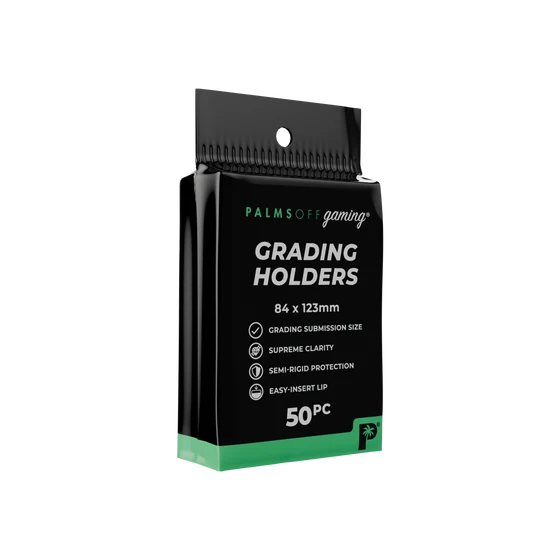
Grading means sending a card to a company that inspects it, gives it a grade out of 10 and seals it in a hard plastic case, often called a slab. A high grade can make a card worth far more than an ungraded copy, which is why collectors grade their best pulls. PSA is the biggest name in Pokémon grading. Japanese cards are graded exactly like English ones.
How Australians submit to PSA right now
PSA has paused direct submissions from Australia because of changes to US tariffs, which apply to the declared value of the cards. For now Australians send cards through a PSA authorised dealer, a local business that collects submissions, ships them to PSA in bulk and handles customs and insurance. Dealer prices and turnaround times vary, so it is worth comparing a few before you send anything. Expect the whole trip to take months, not weeks, on the cheaper service levels.
How to pack a card for grading
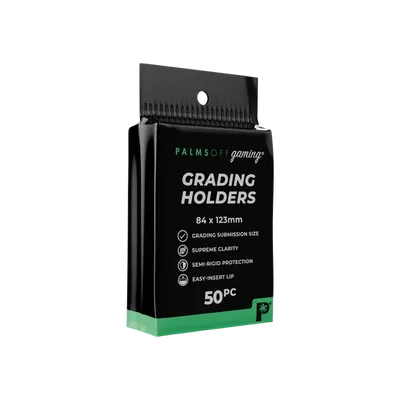
Put each card in a fresh, clear soft sleeve, then slide it into a semi rigid holder such as our Semi Rigids. PSA asks for semi rigids instead of toploaders. Avoid matte or coloured sleeves, since the grader needs to see the card. Your dealer will tell you how they want the cards packed and posted to them.
What does a PSA 10 need?
PSA grades on four things: centring, corners, edges and surface. A PSA 10, Gem Mint, is a virtually perfect card with sharp corners, a clean surface and the artwork centred to within about 55/45 on the front and 75/25 on the back. A PSA 9, Mint, allows one very minor flaw and centring of about 60/40 on the front. Below that the tolerances loosen a step at a time.
Check a card under a bright light before you send it. Look for whitening on the edges of the back, any dent or bend in the corners, scratches across the foil and how evenly the border sits on each side. Our fake card guide also explains what a genuine card should look and feel like.
Which cards are worth grading?
Grading costs money and takes months, so it usually only makes sense for cards worth well above the fee once graded, such as the Special Art Rares and gold cards at the top of a set. Our top hits guide shows which cards those are for every set we stock, while the price checking guide shows where to compare graded and ungraded prices.
The best candidates come straight out of a sealed pack and into a sleeve. Our guide to opening a booster box covers how to keep a fresh pull in the condition it was printed in.
Other grading companies
Beckett (BGS) and CGC grade Pokémon cards too. Beckett can add subgrades for centring, corners, edges and surface, while CGC is known for strict grading. Most Australian collectors still choose PSA for their best cards, since its slabs are the best known on the resale market.
Ready to open one?
Every box here is sealed Japanese stock on the shelf in Sydney, dispatched in 1 to 3 business days with flat $14 tracked shipping.
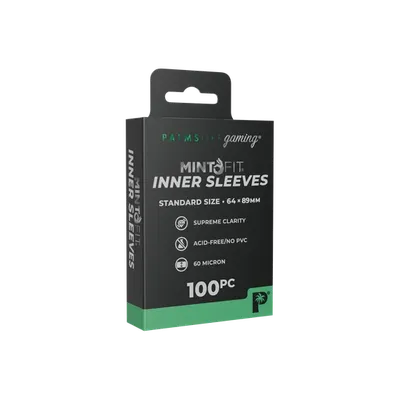 Inner Sleeves
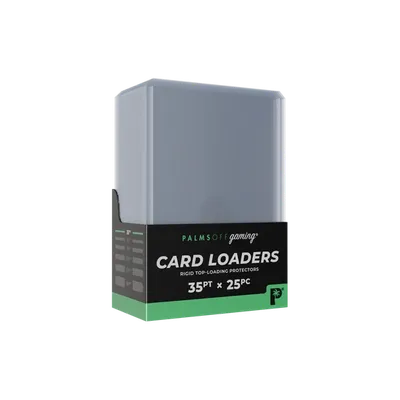 Top Loaders 35pt
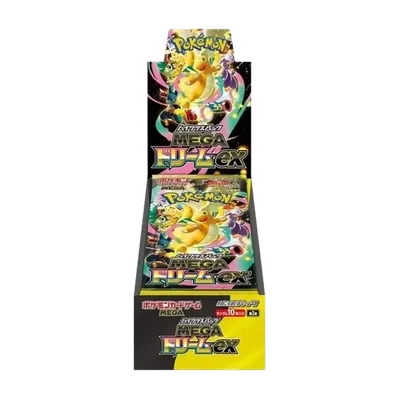 Mega Dream ex
Kai Chai is a Pokémon card collector in Sydney and the founder of WOOPR, a shop that sells only sealed Japanese product. More about WOOPR.
Sources
- PSA, grading standards
- PSA, how to submit cards for grading
- Card Pop, PSA grading guide for Australian collectors (May 2026)
- Holo Vault, PSA grading in Australia (May 2026)
- Phantom Display, PSA grading scale explained
- Card Grading App, PSA grading standards
More guides
- How to open a Japanese Pokémon booster boxChecking the seal, the tear strip, opening packs cleanly and sleeving the hits.
- How to store Pokémon cards and sealed boxesSleeves, double sleeving, toploaders, semi rigids and cases, plus where to keep sealed boxes.
- How to read a Japanese Pokémon cardStage, HP, attacks, the codes along the bottom and a glossary of the Japanese words on a card.
- Are Japanese Pokémon cards better quality?Print, cutting, card stock, holo finishes and box art, compared with English cards.
- Can you use Japanese Pokémon cards in tournaments?What the official rules say about Japanese cards at events in Australia.
- Japanese vs English Pokémon booster boxesPacks per box, cards per pack, which comes out first and how the rarity names line up.