Counterfeit Japanese cards turn up most often as expensive singles, the Special Art Rares and gold cards that sell for the most. No single check proves a card is real. The best approach is to run several of the checks below, because a genuine card passes every one of them while a fake usually fails two or three at once.
1. Print sharpness
Genuine cards are printed sharply, with clean lines in the artwork and crisp edges on every letter. Many fakes are printed coarsely enough to see by eye. Look for artwork that looks slightly blurred, colours that look faint or washed out and small text that smudges at the edges. A phone camera zoomed in on the attack text makes the difference easier to see.
2. Fonts and text
Pokémon uses its own typefaces with very even spacing, which counterfeiters find hard to copy. On a fake the text often looks a little bolder or thinner than it should, or sits slightly out of line. Look the card up by its number on the official Japanese card search and compare the name, the attack text and the set symbol letter by letter. Our guide to reading a Japanese card shows where each of those sits on the card.
3. Texture and feel
A real card has some firmness to it and a smooth surface. Fakes are usually printed on generic card stock, so they tend to feel thinner, softer or oddly slippery. Many modern full art cards also have a raised texture or a pattern in the foil that you can feel with a fingertip. When a card that should have that texture feels completely flat, treat it with suspicion.
4. The light test
Genuine Pokémon cards are made from layered stock with a dark core, so very little light passes through them. Hold the card up to a phone torch in a dim room. A fake printed on cheap stock often lets the light glow straight through. Some better fakes pass this test, so use it alongside the other checks.
5. Size and edges
Real cards are 63 by 88 millimetres and cut cleanly by machine, with even edges and matching rounded corners. Some fakes are cut slightly too big or too small, which shows up straight away when you stack the card on top of one you know is real. Look at the edges side on for rough cutting and check that every corner has the same curve.
6. The card back
Japanese cards have their own back design, different from the back of every English and international card. The official tournament rules even treat Japanese cards as marked for that reason. Compare the back of a suspect card with a real Japanese card from the same era under the same light. Fakes often get the colour of the back wrong or print it less sharply.
7. The holo pattern
Tilt the card under a bright light and watch the foil. On a genuine card the holo pattern moves naturally and matches other copies of the same card. Fake holo tends to look too strong, messy or flat. Some fakes skip the special foil treatment altogether.
8. Spelling and names
Cheaper fakes sometimes carry misspelled Pokémon or attack names, odd gaps in the text or the wrong character name. Before deciding a card is fake for this reason alone, check the official card search, since a small number of genuine error prints exist.
Seller red flags
Most fakes are caught before they are bought. Be wary of a price far below what the card sells for everywhere else, a seller with no business details you can check and a seller with endless stock of a card that is famously hard to pull. Ask for clear photos of the front, back and edges of any expensive single before you pay. Our guide on checking Japanese card prices helps you spot a price that is too good to be true.
Buying sealed product from a seller you trust removes most of this risk, since the cards come straight out of factory sealed packs. Our guide on spotting a resealed box covers how to check the seal itself.
Ready to open one?
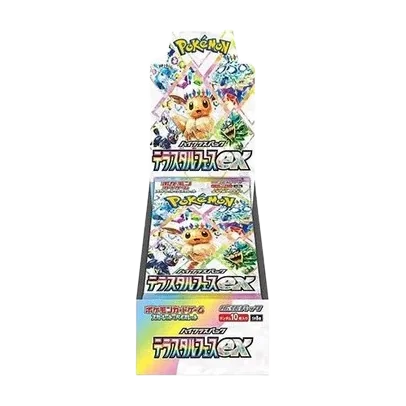
Every box here is sealed Japanese stock on the shelf in Sydney, dispatched in 1 to 3 business days with flat $14 tracked shipping.
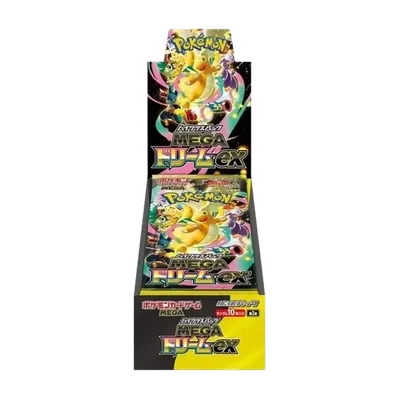 Mega Dream ex
 Top Loaders 35pt
 Standard Sleeves
Kai Chai is a Pokémon card collector in Sydney and the founder of WOOPR, a shop that sells only sealed Japanese product. More about WOOPR.
Sources
- Samurai Sword Tokyo, how to spot fake Japanese Pokémon cards
- TCG Bestia, how to spot fake Japanese Pokémon cards
- Legit App, how to legit check Japanese Pokémon cards
- Altema Pokéca, how to tell fake Pokémon cards (Japanese)
- Pokémon Card Game official card search (Japanese)
- Play! Pokémon TCG Tournament Handbook, revised 21 May 2026
More guides
- Buying Japanese Pokémon boxes in Australia without the queuesLotteries and limits in Japan, what importing involves and buying from a shop in Australia.
- How much does a Japanese booster box cost in Australia?Live price ranges by kind of box, why prices differ and the cheapest way to open a set.
- How to spot a resealed Japanese Pokémon booster boxThe perforated top, the shrink wrap, the packs and what Australian law says when a box is not what it claims.
- How to check what a Japanese Pokémon card is worthWhere to look up Japanese card prices and how to read them from Australia.
- Pokémon Center Japan exclusives explainedHow Pokémon Center Online sells exclusives and what is in the Tohoku, Hiroshima and Fukuoka Special Boxes.
- When do new Japanese Pokémon sets come out?How often new sets land, on which day and how far ahead of English.